Installation & Performance art — Cardboard Tower
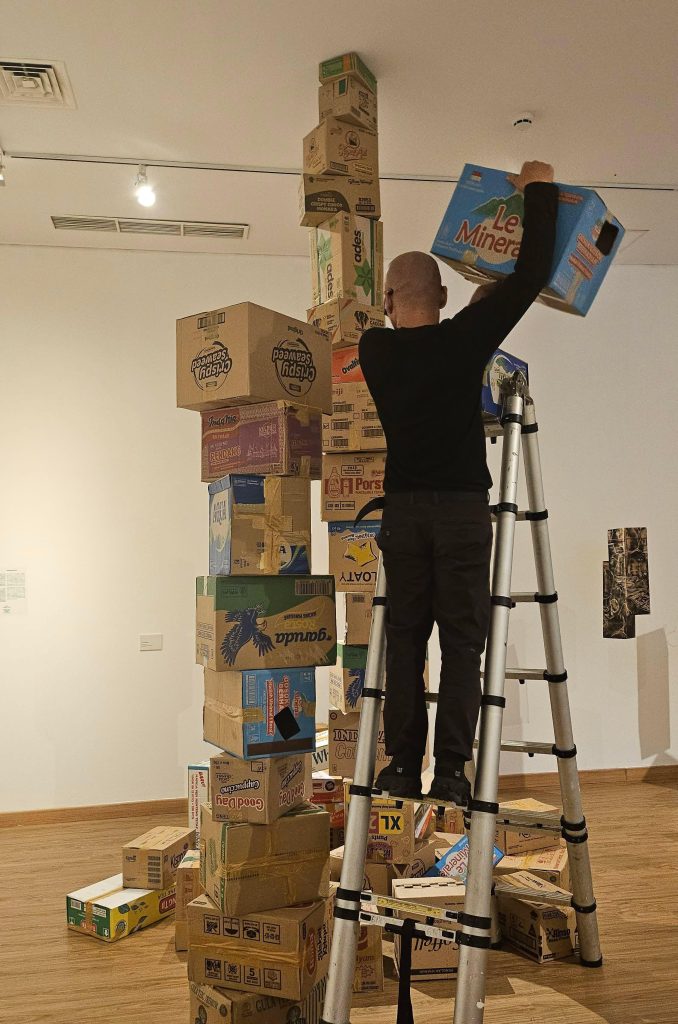
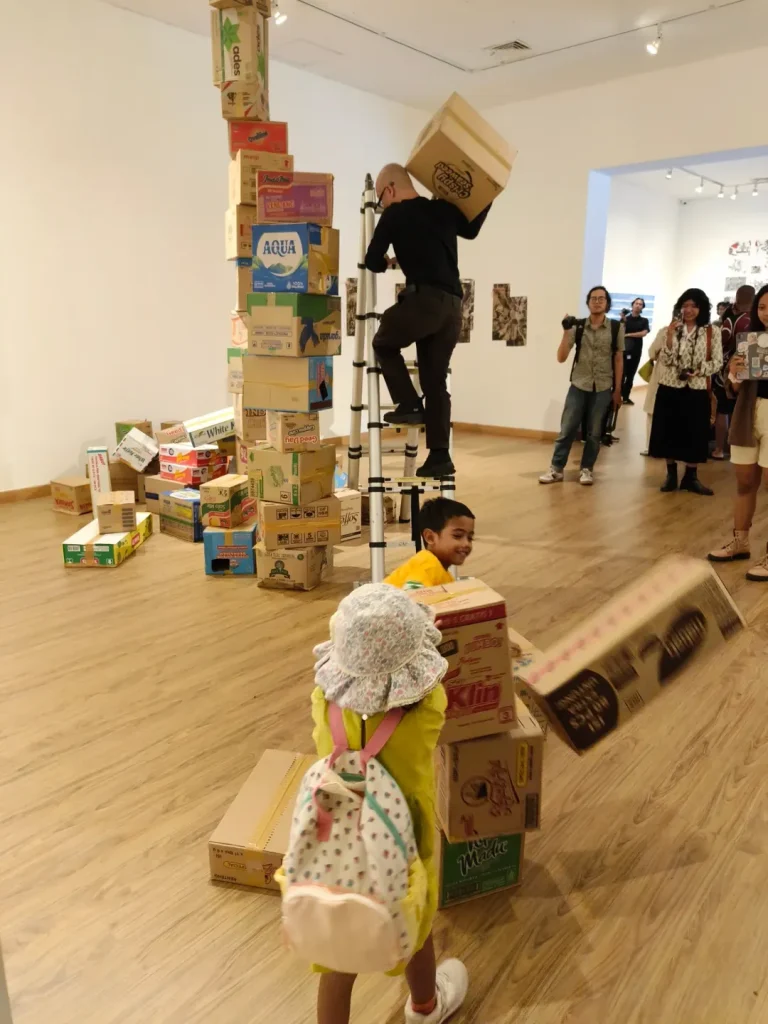
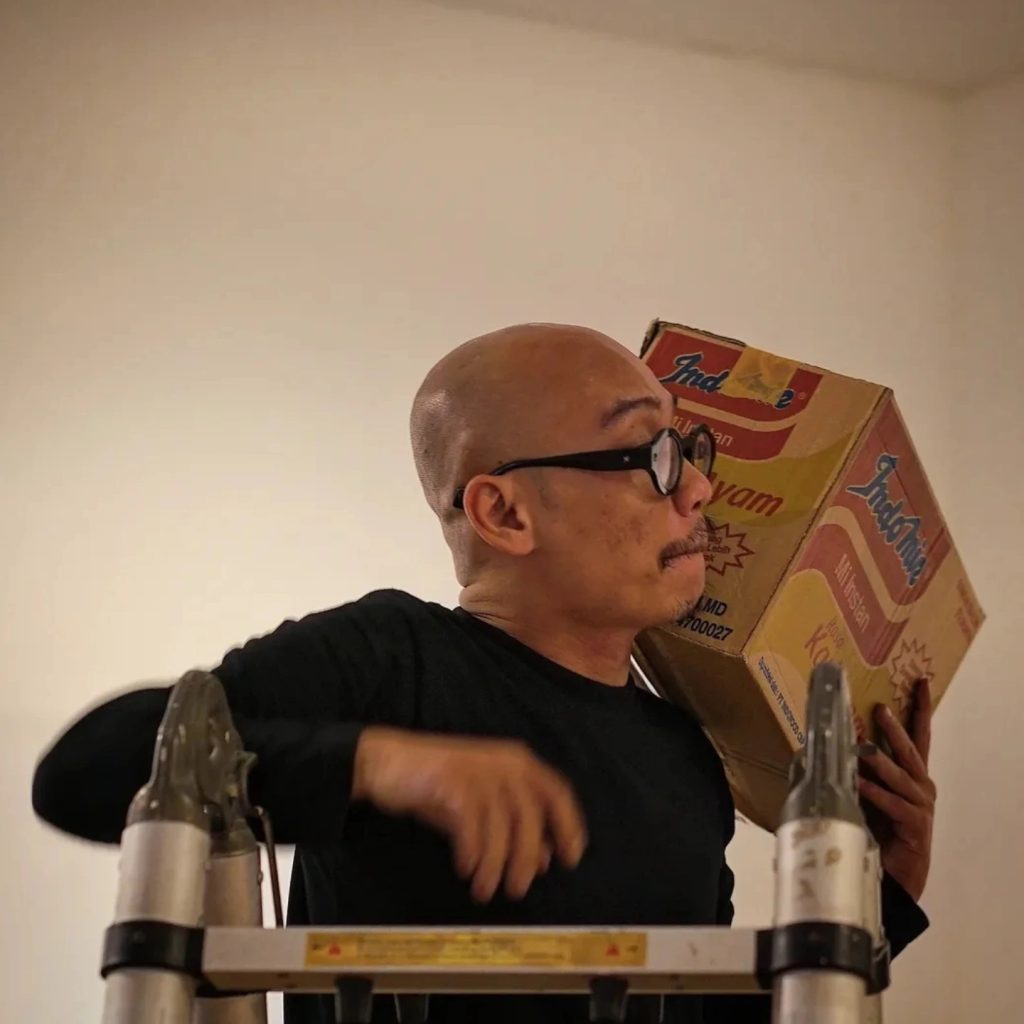
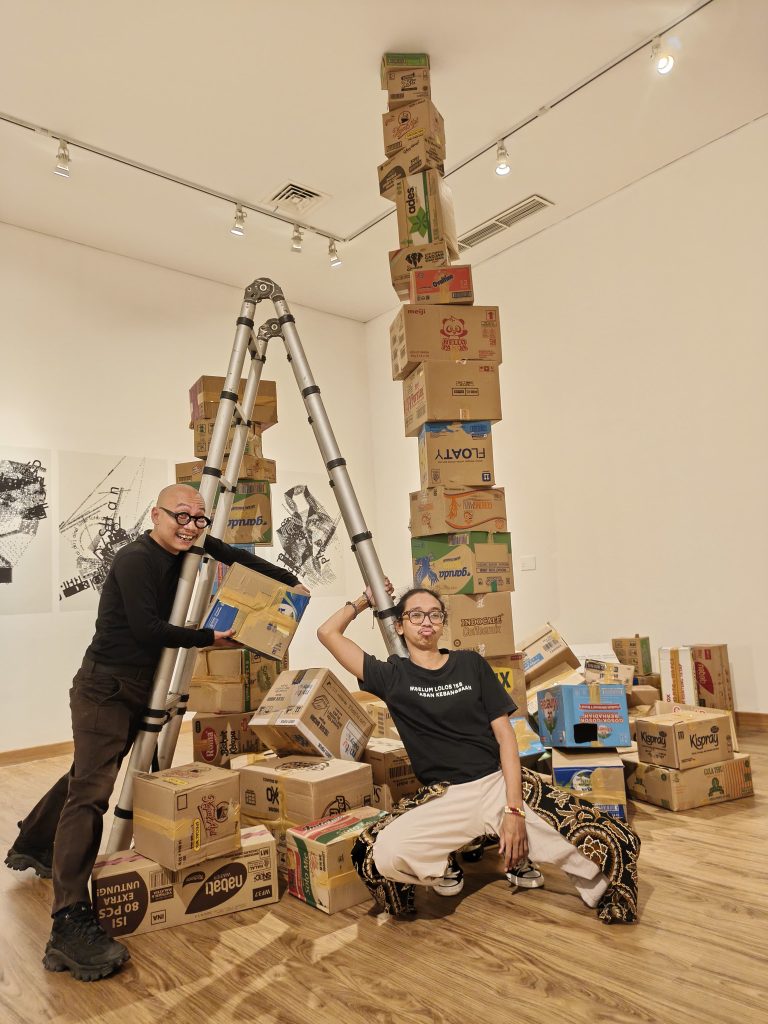
This performance art was first carried out at the National Gallery of Indonesia during the exhibition Rules of the Game. The work emerged from a residency and incubation program at MTN Kritik Lab organized by Forum Lenteng. The series of activities was conducted in Jakarta, particularly at the Jakarta Institute of the Arts. I feel that this work needs to continue evolving by adapting to local contexts; therefore, I am taking the initiative to submit it. I will present the concept and its creation process in more detail:
Art has never been truly separated from human life, yet the history of modern aesthetics has long encouraged us to believe otherwise. Since Immanuel Kant defined art as an autonomous domain in Critique of the Power of Judgment (1790), art has been understood as a pure experience standing outside the material world—detached from labor, the body, and everyday life. The division between sensation and reason, between idea and action, forms an aesthetic legacy that still shapes our understanding today: that art is something to be seen and contemplated, not something to be worked and lived.
It is from this premise that Disorderria emerges. This work rests on the idea of Reclaiming Tekne—an effort to return art to the root of tekne: knowledge generated through bodily action and material engagement. If modern aesthetics glorifies distance, then tekne foregrounds closeness. It does not situate beauty in sublime representation, but in the acts of tending, making, arranging, and repeating. In this view, art is no longer understood as imagery but as embodied labor.
This work uses discarded cardboard as its primary medium to emphasize that position. Cardboard is the clearest symbol of everyday life within the modern commodity system: it carries traces of logistics, consumption, and the circulation of goods. Its fragile and temporary nature makes it an apt metaphor for the contemporary world—a world that keeps moving yet easily collapses. By constructing a 385 cm-tall cardboard tower, Disorderria presents a structure that on one hand strives to stand upright, but on the other remains perpetually threatened by the impermanence of its material.
The cardboard tower is used to illustrate how art, material, and the body meet within the practice of tekne. The performative activities accompanying the installation—assembling, folding, repairing, and tending to the tower—demonstrate that an artwork is not merely an object but a process unfolding in time. This act of tending places the artist’s body at the center of material knowledge. The performance here is not simply a show, but an everyday action resonating with the rhythms of the real world: slow, repetitive, filled with temptations to give up, yet continuously resumed.
From this general notion of tekne, the work moves toward a broader context: a world in turmoil. At a time when war, terrorism, corruption, ecological crisis, and moral despair have become part of global daily life, humans exist in a liminal state between light and darkness. Values such as good and evil, compassion and greed, creation and destruction, are no longer clearly divided. They coexist, intersect, and define one another.